Tools & Apps
Does the Dog Park Actually Work as a Place to Meet People
A look at the dog park as informal social infrastructure — why the structure works better than most third places, and the specific habits that turn it into actual friendship rather than small talk about breeds.
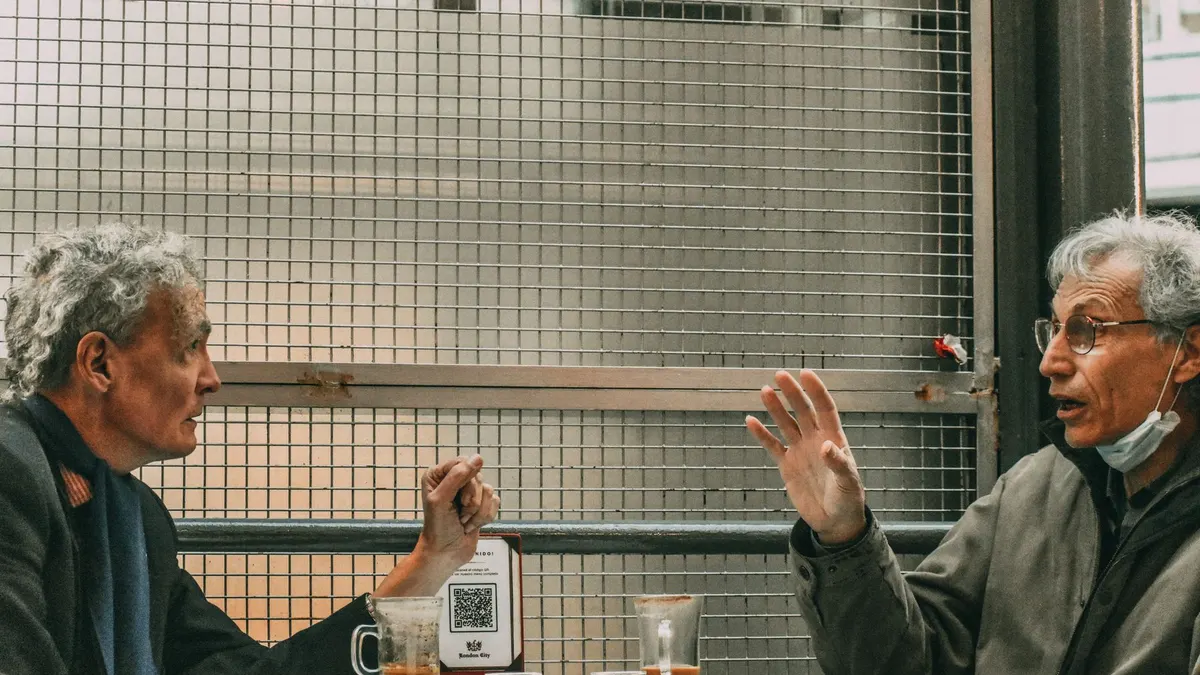
A dog park has something almost no other third place has left: a reason to come back at the same time, with the same people, that has nothing to do with willpower.
Ray Oldenburg coined the term third place in 1989 for the informal gathering spots that sit outside home and work — cafes, barbershops, pubs, the corner shop. His argument was that these places do the quiet work of civic life: they let people know each other a little, regularly, without anyone having to schedule anything. Eric Klinenberg’s 2018 book on social infrastructure made a related point — that the physical design of a place shapes how much contact people actually get, and that this is measurable, not just a vibe.
Both of those books were written before a wave of third-place closures. Research published in Health & Place in August 2025 tracked twelve categories of third place — coffee shops, libraries, museums, recreation centres, restaurants — and found losses across every category between 2019 and 2021, concentrated in the places with the least slack to absorb it. A University of Colorado Boulder summary of that work in September 2025 put it plainly: the loss of senior centres and churches is a driver of loneliness, not a side effect of it.
Dog parks were not in that study’s twelve categories, and that is worth sitting with. They are one of the few pieces of social infrastructure that has expanded rather than contracted, because cities keep building them and dog ownership keeps rising. Whatever you think about small talk over a fence, a dog park is a third place that is not currently disappearing.
Why it has a structural advantage most places don’t
Every third place needs a reason for the same person to show up on the same schedule. Coffee shops rely on habit. Gyms rely on motivation, which is famously unreliable after a long day. A dog park runs on something sturdier: an animal that needs to go outside whether or not you feel like talking to anyone.
That solves the single biggest problem in adult socialising, which is that showing up requires a decision made while tired, and tired people default to not deciding. The dog does the deciding. You are not choosing to go be social. You are taking the dog out, and the park happens to be full of people doing the same thing on the same rough schedule.
AARP’s 2018 survey of adults 45 and older found something that maps onto this almost exactly: people who had spoken to their neighbours were far less likely to be lonely than people who hadn’t — 33% lonely against 61%. The mechanism wasn’t depth of conversation. It was proximity, repeated. A dog park manufactures that proximity daily, for free, without requiring anyone to organise anything.
Where it actually stalls out
The failure mode is specific: people go for months and leave knowing only their dogs’ names for each other. That’s not nothing — recognition and a nod is real, low-grade social contact, and the research on loneliness treats even minimal supportive contact as protective. But it plateaus. Nodding at “Biscuit’s owner” three times a week does not, on its own, become friendship, and a lot of people mistake the plateau for proof that the whole thing doesn’t work.
What actually moves it past that point is almost always one of three things:
A standing time. If you show up at 7:40am most weekdays, you start seeing the same four or five regulars, and regulars are the raw material of a social circle. Randomised timing gets you randomised strangers.
A second thing to talk about. Weather and breeds run out fast. The people who end up actually friends with fellow dog park regulars usually found some other shared thread — same neighbourhood, kids the same age, both new to the city — and the dog park was just where they happened to be standing when they found it.
Someone willing to say the actual sentence. “We’re getting coffee after this on Thursdays if you want to join” is a small, specific, low-stakes invitation, and almost nobody says it first. The American Enterprise Institute’s 2021 survey on American friendship found that close friendships have gotten rarer across the board — the share of men with six or more close friends fell from 55% in 1990 to 27% in 2021 — and a good part of that decline is simply that fewer people take the step from proximity to invitation. The dog park gets you proximity. It does not get you the sentence.
What to actually do with it
Pick a time you can hold, not the time that’s convenient once. Early morning and just-before-dark tend to have the steadiest regulars, because people with jobs default to those windows. If you go at a different time every day, you’re meeting new people every day, which feels productive and isn’t — repetition with the same faces is what turns strangers into acquaintances, and acquaintances into something more.
Give it six weeks before deciding it’s not working. This is longer than it sounds. You need enough repeated exposure for faces to become familiar and for a nod to become a name.
Say the specific thing once you’ve got a name. Not “we should get coffee sometime” — that dies in everyone’s mouth by design, because it commits to nothing and can be safely ignored. “We’re going to the place on the corner after this on Saturday, come if you’re around” has a time and a place already attached. It’s easy to say yes to and easy to say no to, which is exactly why it works.
Don’t outsource the social part to the dog. It’s tempting to let the dogs interact and stand there scrolling your phone next to your own animal’s leash. That’s a fine way to decompress, and there’s no obligation to talk to anyone. But if the goal is connection rather than just getting outside, the phone is the thing to put away, not the invitation.
What it can’t do, and what else is around
A dog park is not a substitute for structured group activity, and it will not replace the friend-group function that a running club, a class, or a standing game night provides. It also, obviously, only works if you have a dog, and it skews toward whoever’s schedule allows a morning or evening walk — which tends to exclude a lot of shift workers and parents of very young children.
For people without a dog, the same logic — standing time, same faces, low-stakes invitation — applies to library reading groups, community garden plots, or a Meetup group built around a specific interest rather than “making friends” as the stated goal; specificity gives people something to talk about besides the fact that they’re both trying to make friends, which is a surprisingly hard thing to talk about directly.
Cigna’s 2025 survey found that 57% of Americans report loneliness, and that figure holds across people who are nominally busy, employed, and surrounded by others. The dog park won’t move a number like that by itself. What it offers is something smaller and more reliable: a place that isn’t closing, that doesn’t require a decision most evenings, and that puts you next to the same handful of people often enough that eventually, if you say the sentence, something might come of it.
Where this comes from
- The Great Good Place: Cafes, Coffee Shops, Bookstores, Bars, Hair Salons and Other Hangouts at the Heart of a Community
- Palaces for the People: How Social Infrastructure Can Help Fight Inequality, Polarization, and the Decline of Civic Life
- Uneven Access to Essential Services and Amenities: Geographic Disparities in Third Place Availability Across the United States, 2010 to 2021
- As Community Spaces Disappear, New Research Warns of Health and Equity Risks
- Loneliness and Social Connections: A National Survey of Adults 45 and Older
- The State of American Friendship: Change, Challenges, and Loss
- Loneliness in America 2025