Life Changes
The Text You're Not Sending Is Probably Wanted
Reaching out feels like imposing on someone else's time. The research on who actually wants to be asked says the opposite is true.
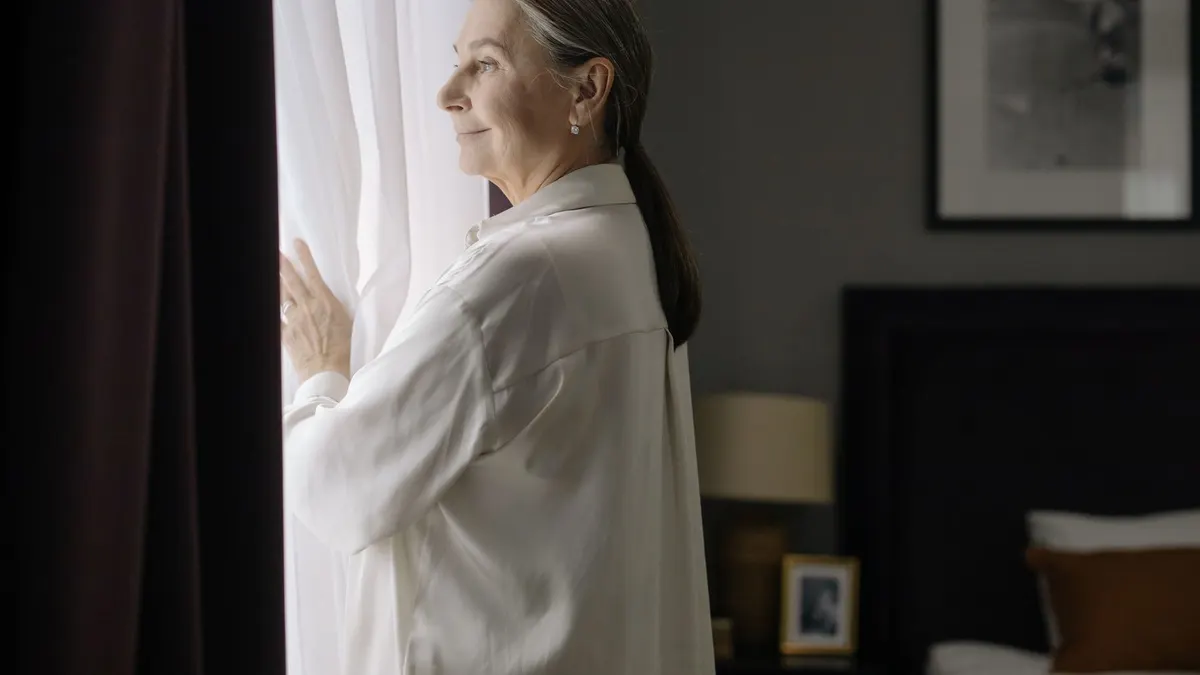
There’s a specific kind of stall that happens with a phone in your hand. You’ve found the name. You’ve typed something like “hey, been thinking of you, want to grab coffee sometime.” And then you don’t send it, because some part of you is running a calculation: they’re busy, they have their own people, this will land as a chore they now have to respond to.
That calculation is wrong more often than it feels wrong. And there’s a specific piece of research that shows exactly how wrong.
What the lonely people actually said
The Harvard Graduate School of Education’s Making Caring Common project surveyed Americans on loneliness in 2021 and found something that should change how you read your own hesitation. Among young adults who reported being lonely, about half said that no one had taken more than a few minutes in recent weeks to ask how they were doing in a way that felt genuine.
Read that again from the other direction. It doesn’t say these people wanted to be left alone. It says nobody asked. The same survey found 36% of Americans reporting serious loneliness overall, and 61% of young adults specifically. That’s not a small pocket of people quietly enjoying their solitude and hoping not to be disturbed. That’s more than a third of the country, and most of them are not being reached.
So when you hesitate over a text because you assume the other person is fine and busy and doesn’t need the interruption, you are guessing. The odds, on the numbers, are that they’re not fine, they’re not too busy for this, and the interruption is the thing they’ve been waiting for without knowing how to ask for it themselves.
Why the guess goes wrong
Nobody sends the lonely people a memo. Loneliness doesn’t announce itself. It hides behind normal-looking days, ordinary replies, “good, busy!” texts. So the person deciding whether to reach out has no direct evidence of the other person’s state, and defaults to the assumption that requires the least of them: they’re fine, don’t bother them.
This isn’t a character flaw. It’s what happens when you’re making a decision with the wrong evidence. You have visibility into your own hesitation, effort, and fear of rejection. You have none into what the other person actually feels sitting alone in their apartment on a Tuesday. The Cigna Group’s 2025 loneliness survey found 57% of Americans reporting loneliness, including 52% of workers. If you picked a name from your contacts at random, more than half the time the honest answer to “would this text be unwelcome” is no, and a fair share of the time the honest answer is “I’ve been hoping someone would do this.”
The American Enterprise Institute’s 2021 survey on American friendship adds a harder edge to this. Twelve percent of Americans report having no close friends at all, up from 3% in 1990. Among men, those reporting no close friends rose fivefold over the same period. A lot of these people are not choosing isolation. They are stuck in the same stall you are — waiting for someone else to make the first move, while the people around them wait too, and nobody moves.
The neighbour evidence
AARP’s 2018 survey of adults 45 and older found something concrete about low-stakes contact specifically. Among people who had spoken to their neighbours, 33% were lonely. Among those who never had, it was 61%. That’s not a proof of causation — people who are already isolated may be less likely to chat over a fence in the first place. But it lines up with everything else here: the barrier being crossed is small. A hallway exchange. A comment about the weather. Nobody is describing a deep confessional conversation. They’re describing the kind of contact that costs almost nothing to attempt and correlates with a nearly two-to-one difference in loneliness.
Small contact, attempted, beats no contact, deliberated over.
What actually worked, and who did it
The clearest evidence that low-stakes outreach works at scale comes from a large trial published this year. The HEAL-HOA randomized clinical trial recruited 1,151 older adults who were living in poverty, largely alone, and digitally excluded — about as isolated a population as this research gets. The intervention was eight telephone sessions, thirty minutes each, over one month. It was delivered not by therapists but by trained laypeople, who were themselves older adults who had experienced loneliness.
At twelve months, the group getting these calls showed significantly greater reduction in loneliness than a comparison group that got straightforward befriending calls — the ordinary, well-meaning, “just checking in” kind. The calls that included some structure, some direction, some actual content beyond warmth, outperformed pure friendly contact.
Two things are worth taking from this. First: ordinary people, with no professional training, delivering a short phone call on a schedule, moved the needle on loneliness in a group about as isolated as they come. You do not need credentials to make a difference to someone. Second: even plain befriending — the control condition here — is still an active ingredient. It just isn’t the strongest one. Reaching out works. Reaching out with a little structure works better.
What this changes about the text you’re not sending
Stop asking “will this be an imposition.” You don’t have the information to answer that question, and the evidence says your default guess is probably wrong. Ask a smaller, answerable question instead: is there a specific thing I can propose, at a specific time, that gives them an easy yes or no.
“Thinking of you, hope you’re well” invites nothing and asks nothing back. It’s easy to send and easy to leave unanswered, which is why it changes so little. “I’m getting coffee at the place on 5th Saturday at 10, want to come” is a decision, not a mood. It’s harder to write and much easier to say yes to.
The HEAL-HOA callers weren’t checking in vaguely. They were showing up on a schedule with something to talk through. That’s the model worth borrowing, scaled down to your own life: pick a time, name a place, send it plainly, and stop treating the other person’s silence as evidence they didn’t want to hear from you. More than half the time, the numbers say they did.
Where this comes from
- Loneliness in America: How the Pandemic Has Deepened an Epidemic of Loneliness
- Loneliness and Social Connections: A National Survey of Adults 45 and Older
- Loneliness in America 2025
- Behavioral Activation and Mindfulness Interventions in Reducing Loneliness and Improving Well-Being in Older Adults: The HEAL-HOA Randomized Clinical Trial
- The State of American Friendship: Change, Challenges, and Loss