Family & Parents
What a Year of Showing Up Actually Gets You
A practical case for treating friendship as a slow accumulation rather than a project with a deadline, aimed at parents whose social life shrank when the baby arrived.
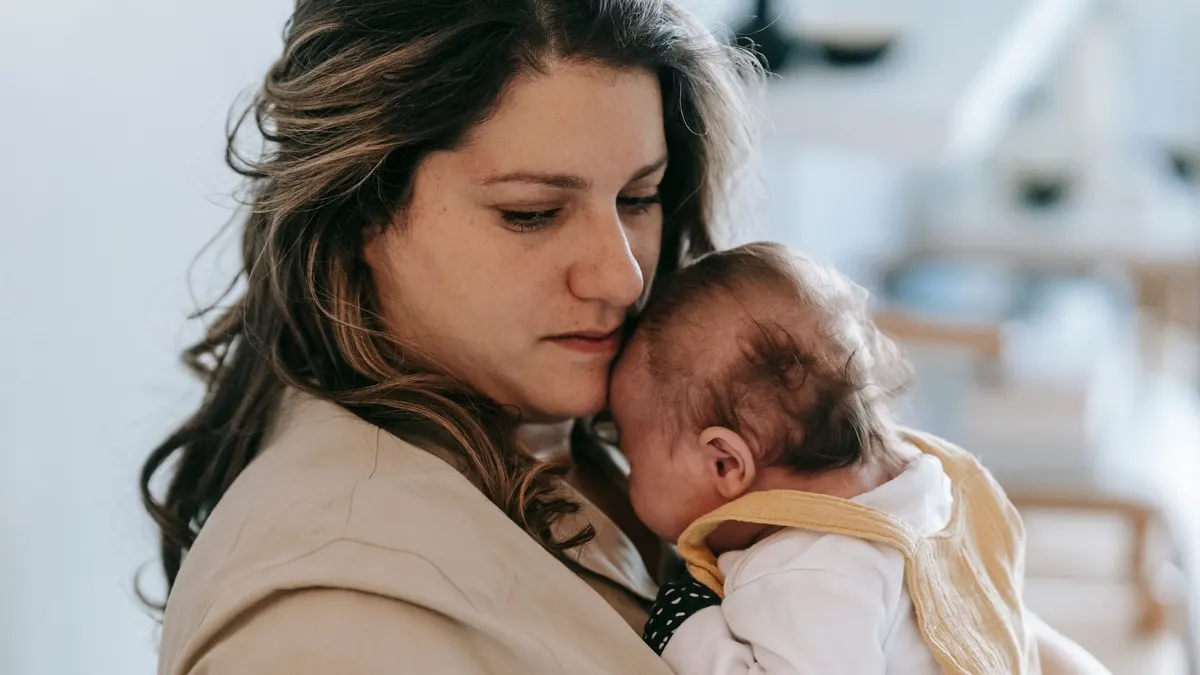
Fifty-one percent of mothers with young children report serious loneliness, according to a 2021 survey from Harvard’s Making Caring Common project. That is not a footnote about a hard stretch. That is one in two.
If you are in that stretch now, you have probably already tried the thing everyone suggests: go to one event, meet some people, see what happens. It rarely produces a friendship. It produces a pleasant hour and then nothing, because nothing was built to survive the six months after.
This is about what a slower approach gets you instead, and why the slowness is the point rather than a flaw in it.
The one-event problem
A single meetup, a single mum-and-baby class, a single “let’s get the kids together sometime” at pickup — these feel like progress because something happened. But a friendship needs repeated contact to form, and one occasion is not repetition. It’s a data point.
The American Enterprise Institute’s 2021 survey on friendship found that 12% of Americans report having no close friends at all, up from just 3% in 1990. That number didn’t move because people stopped attending events. It moved because the informal, repeated contact that used to build friendships — the same faces at the same bar, the same club, the same bowling league Robert Putnam described in Bowling Alone — has thinned out. Fewer people belong to anything that meets more than once.
For a new parent, the arithmetic is worse. You have less spare time, less spare energy, and the friends you had before are on their own, unsynchronised schedules. A single good conversation at a baby group doesn’t fix that. What fixes it is the fifth conversation, the tenth, the one where you stop performing and just talk.
What a year actually buys
Nothing dramatic happens in month one. That’s worth saying plainly, because most people quit around then, having concluded it isn’t working.
Here’s roughly what a year of low-effort, repeated contact with the same small group tends to produce, based on how these things generally unfold rather than any single study:
Months one to three are logistics. You’re learning names, learning who’s easy to talk to and who isn’t, working out whether the group even continues to exist past its first few sessions. This period feels like nothing is happening because nothing much is.
Months four to six are where it starts to hold. You know who’ll be there. You can ask a small favour — watch the buggy, swap a class time — without it feeling like an imposition. Eric Klinenberg’s research on social infrastructure in Palaces for the People makes a related point: it’s the physical repetition of a shared space, not any particular event held in it, that turns strangers into acquaintances and acquaintances into something more solid.
Months seven to twelve are where it becomes useful rather than just pleasant. This is when someone texts you first. When you find out, almost by accident, that two of you are dealing with the same thing at 3am. When the group survives someone missing three weeks running without collapsing.
None of this is fast. All of it depends on the same people showing up to the same thing.
Why sameness beats variety
It is tempting to spread yourself across several things — a class here, an app there, a different group each week — on the theory that more surface area means more chances of a match. For a year of limited time, this usually backfires.
Ray Oldenburg’s concept of the third place, laid out in The Great Good Place, describes why. A third place works because it’s the same place, visited often enough that you become a known quantity there. Not a stranger who might come back. A regular. That status can’t be earned by trying five different regulars.
If you have two hours a week for anything social, one recurring commitment for a year will get you further than five one-off tries. This runs against instinct — trying more things feels like doing more — but the AEI data on friendship decline points the same way: what disappeared wasn’t willingness to try new things, it was the structures that used to guarantee repeat contact without anyone having to engineer it.
The specific thing to do
Pick one recurring thing, not five occasional ones. A library toddler session that runs weekly. A parent-and-baby swim slot at the same pool, same day, every week. A church playgroup, a running buggy club, a neighbourhood WhatsApp meetup that actually meets. It matters less what it is than that it repeats on a fixed day, so you don’t have to decide afresh each week whether it’s worth the effort.
Go for eight weeks before deciding anything. Not because eight is magic, but because it’s roughly the point at which you’ll actually know who’s there consistently, rather than guessing from two visits. Missing a week is fine. Missing every other week defeats the purpose — the value is in becoming a familiar face, and that requires a certain density of showing up.
Say yes to the small, boring overtures. Someone offering to walk to the car park together. Someone asking if you want to grab a coffee after, even though you’re exhausted and coffee sounds like effort. Those unglamorous offers are the actual mechanism by which acquaintance becomes friendship. They rarely look significant at the time.
Don’t judge it at week three. This is the point most people abandon the plan, usually because it still feels like a room of strangers who happen to attend the same thing you do. That’s what week three is supposed to feel like. It is not a sign you’ve chosen badly.
What this doesn’t fix
Being honest about the limits: none of this addresses why the informal structures thinned out in the first place — closed libraries, fewer union halls, remote work, people scattered away from where they grew up. That’s a policy-scale problem, not a personal one, and no amount of individual persistence rebuilds a third place that’s closed.
It also won’t help if the one thing you pick turns out to be genuinely wrong for you — wrong time, wrong crowd, nobody you click with even a little. In that case switching is correct. But switch once, deliberately, and commit to the replacement for a similar stretch. The failure mode to avoid is cycling through five things for two weeks each and concluding that none of it works, when what actually happened is that none of it was given long enough to.
The AARP’s 2018 survey of adults 45 and older found something worth carrying into this: people who’d spoken to their neighbours were roughly half as likely to be lonely as those who never had. Not deep friendship. Just talking to the people already near you, repeatedly, over time. That’s the whole method, really. It’s less about finding the right group and more about staying in a room long enough to stop being new in it.
Where this comes from
- Loneliness in America: How the Pandemic Has Deepened an Epidemic of Loneliness
- The State of American Friendship: Change, Challenges, and Loss
- Loneliness and Social Connections: A National Survey of Adults 45 and Older
- Palaces for the People: How Social Infrastructure Can Help Fight Inequality, Polarization, and the Decline of Civic Life
- Bowling Alone: The Collapse and Revival of American Community
- The Great Good Place: Cafes, Coffee Shops, Bookstores, Bars, Hair Salons and Other Hangouts at the Heart of a Community