Making Friends
What the Dog Park Actually Offers a Lonely Person
Dog parks tick most of the boxes for a working third place — but they only pay off if you show up on a schedule, not when the mood strikes.
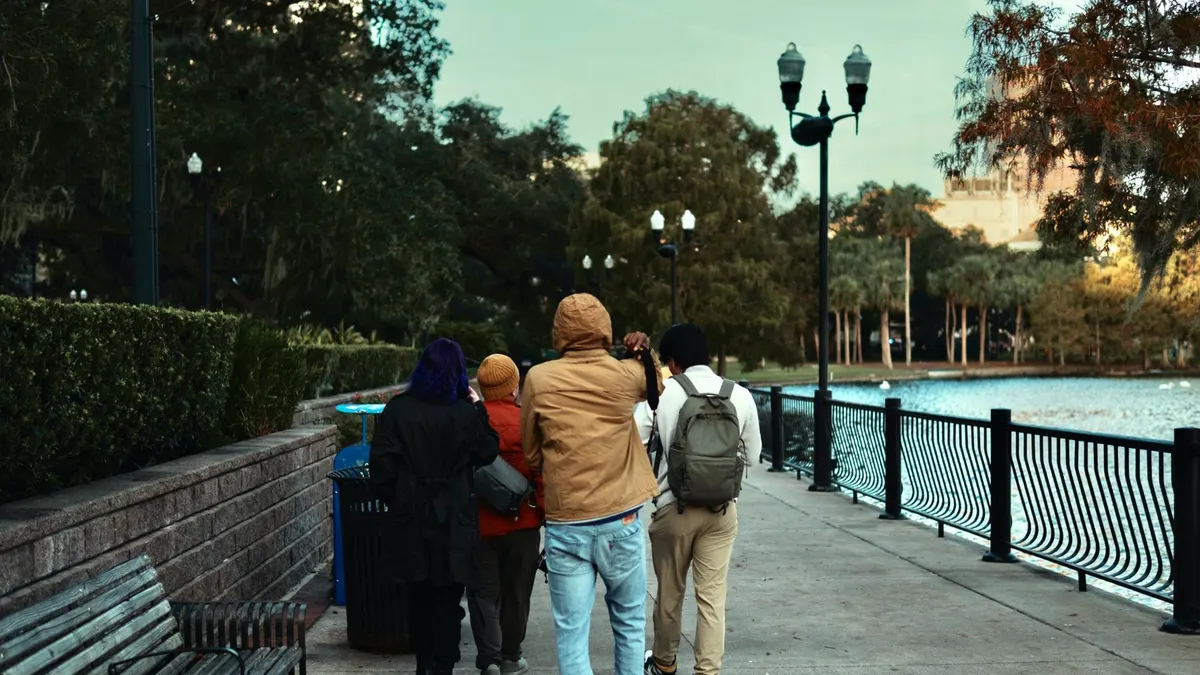
Six-thirty most evenings, the same dozen or so people show up at the same fenced patch of grass, holding leashes, saying the same things to each other about the weather and whose dog just stole whose ball. Nobody planned to be friends. They just kept being at the same place at the same time, and eventually it turned into something.
That is worth taking seriously as a case study, because the dog park has an unusual amount going for it as a place to meet people — more than most places people are told to try.
What a third place actually needs to do
The sociologist Ray Oldenburg coined the term “third place” in 1989 for the category of spot that isn’t home and isn’t work but is where informal public life happens — cafes, bars, barbershops, the corner store. His argument was that these places share a few features: they’re neutral ground, so nobody is hosting and nobody is a guest. They’re a leveler, so job title and income mostly stop mattering once you’re inside. And the main activity is conversation, not whatever the place is nominally for.
The dog park meets two of those three cleanly. It’s neutral ground almost by design — nobody owns it, nobody is on the hook for anyone else being there, and you can leave whenever you want without explaining yourself. It’s a leveler in the most literal way: dogs don’t care what you do for work, and neither does anyone else there while your dog is doing something undignified in front of a stranger’s dog.
The third criterion — conversation is the point — is where it gets interesting. Technically the point is the dog. But the dog is doing something useful: it gives everyone a legitimate reason to talk without having to invent one. That’s harder to manufacture than it sounds. Most adults find opening a conversation with a stranger effortful and a little exposing. A dog running toward another dog removes the need to open anything. Something is already happening, and you’re both watching it.
Where it falls short of a real third place
Oldenburg’s other requirements are less flattering. A proper third place has regulars — people who are recognisably part of the furniture, whose absence would be noticed. It has some shelter from weather and some seating, so people can stay rather than just pass through. And it’s accessible enough that people can walk in without much planning.
Dog parks are patchy on all three. In a lot of climates, a dog park in January is a different, much emptier place than a dog park in June, and the people who made it work through summer scatter. There’s usually nowhere to sit, which caps how long anyone stays and how deep a conversation can go — most dog park exchanges last the length of one ball throw, not the length of a proper sit-down. And critically, it only works for people who have a dog. Oldenburg’s cafés and bars didn’t require you to own anything to belong there. The dog park has a built-in membership fee that most third places don’t.
There’s also a structural problem the research on physical gathering spaces keeps surfacing: this kind of infrastructure has been thinning out generally. A 2025 study in Health & Place tracked twelve categories of what it called third places — coffee shops, libraries, museums, recreation centres, restaurants — across the US from 2010 to 2021 and found closures in every category, concentrated in places already short on resources: rural areas and neighbourhoods with higher social vulnerability. Dog parks aren’t in that dataset specifically, but they run on the same municipal and civic infrastructure — parks departments, land, upkeep — that’s been squeezed. Eric Klinenberg’s 2018 book on social infrastructure makes the broader point directly: the physical places available for informal contact shape how much informal contact actually happens, and that infrastructure isn’t neutral or automatic. It gets built, funded, and sometimes lets go.
The part that actually does the work
Here’s the thing that matters more than the setting: what turns a dog park into a source of actual connection isn’t the dog park itself. It’s going back.
Robert Putnam’s argument in Bowling Alone, made a quarter-century ago and still the clearest version of this point, is that American social life declined less because people stopped liking each other and more because the habits that put people in the same room repeatedly — the bowling league, the club meeting, the regular civic gathering — thinned out. A single visit to any third place, dog park included, gets you almost nothing. What builds a relationship is being recognisable to someone across the tenth visit, the twentieth, the time your dog was sick and someone asked why you weren’t there.
AARP’s 2018 survey of adults 45 and older found something that maps onto this almost exactly, even though it was about neighbours rather than dog parks specifically: 33% of people who had spoken to their neighbours reported being lonely, against 61% of those who never had. The mechanism isn’t the neighbour conversation itself. It’s that talking to a neighbour requires and reinforces a kind of repeated, low-stakes proximity — you see the same person because you’re structurally near them, again and again, without having to arrange it. A dog park does the same thing on purpose. If you go at 6:30pm on weekdays, you will, without intending to, start seeing the same faces. That’s the entire mechanism. It’s not charm. It’s schedule.
This matters especially for men, who the American Enterprise Institute’s 2021 survey on friendship found have lost close friendships faster than almost any other group — the share of men reporting six or more close friends fell from 55% in 1990 to 27% by 2021, and 15% now report having no close friends at all, up fivefold since 1990. Much of that decline tracks the disappearance of exactly the kind of unplanned, repeated, low-effort contact a dog park still supplies. It doesn’t require you to organise anything. It doesn’t require anyone to accept an invitation. You just have to be there when other people also happen to be there.
What actually makes it work
If you have a dog and you’re trying to use this, the advice that follows from all of this is unglamorous: pick a time, not a mood. Going whenever you happen to feel like it means you’re always meeting a slightly different crowd, and you never accumulate the recognisability that turns “the person with the terrier” into an actual acquaintance. Going at the same time on the same days, even three times a week, means you’re building toward regular status faster than you’d think — usually within a few weeks, according to the general pattern researchers find with any repeated low-stakes contact.
Say something small and specific rather than generic. “How old is he” gets you further than “nice dog,” because it invites an actual answer rather than a nod.
And don’t expect it to replace deeper friendship on its own. What a dog park is good for is the bottom layer — familiar faces, a sense of belonging to a place, low-stakes warmth on a day that would otherwise have none. Whether it turns into an actual friendship, the kind where you’d call someone if something went wrong, depends on what you do after the park: whether you suggest a coffee once you already know their name, whether you exchange numbers when one of the dogs gets sick. The dog park gets you to the doorway. It doesn’t walk you through it. That part still takes asking.
Where this comes from
- The Great Good Place: Cafes, Coffee Shops, Bookstores, Bars, Hair Salons and Other Hangouts at the Heart of a Community
- Bowling Alone: The Collapse and Revival of American Community
- Palaces for the People: How Social Infrastructure Can Help Fight Inequality, Polarization, and the Decline of Civic Life
- Loneliness and Social Connections: A National Survey of Adults 45 and Older
- Uneven Access to Essential Services and Amenities: Geographic Disparities in Third Place Availability Across the United States, 2010 to 2021
- As Community Spaces Disappear, New Research Warns of Health and Equity Risks
- The State of American Friendship: Change, Challenges, and Loss