The Science
When Being Social Costs Money You Don't Have
A lot of advice about making friends assumes a $15 cocktail is a rounding error. It isn't for everyone. Here's how to build a social life around what things actually cost.
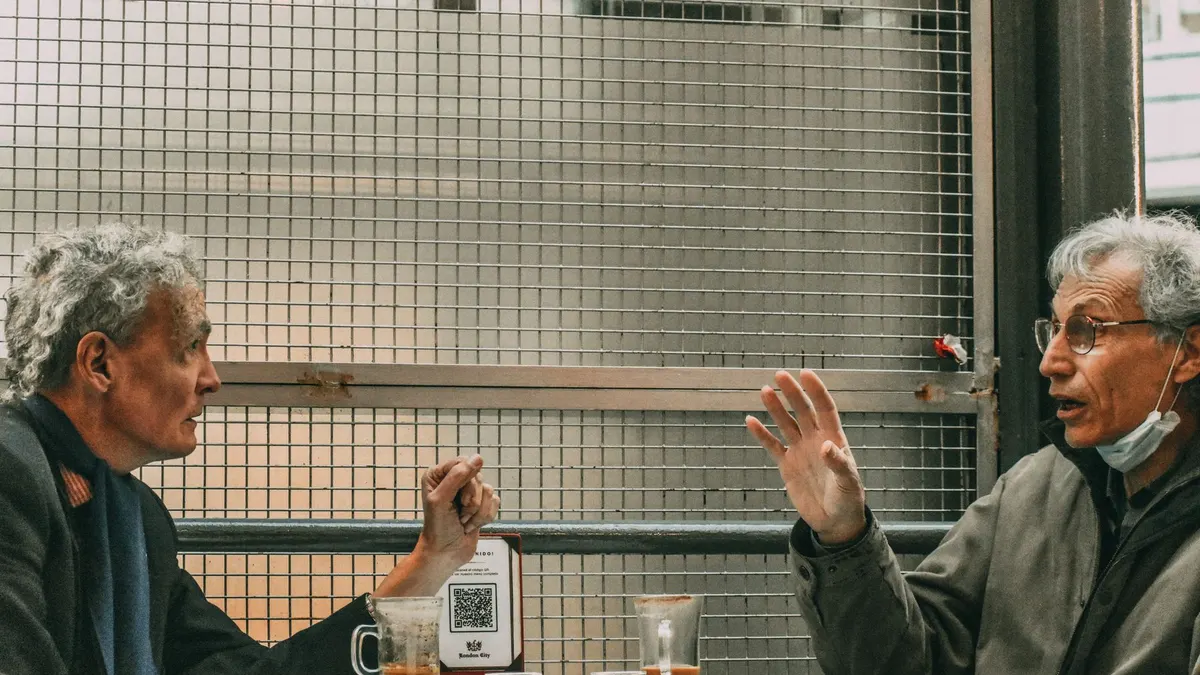
A weeknight run club is free. A weeknight trivia night usually isn’t, once you’ve bought a drink because everyone else is buying a drink. A book club is free until it’s your turn to host and you feel like you need to have matching mugs. None of this gets said out loud in most advice about making friends, which tends to assume that showing up is the hard part and the money is incidental.
For a lot of people, the money is not incidental. It’s the reason they didn’t show up.
The advice has a price tag nobody mentions
Look at the standard list: join a class, go to a coffee shop regularly, get a gym membership, try the new restaurant everyone’s talking about, go to happy hour. Add it up over a month and you’re looking at real money — often more than someone budgeting carefully has set aside for “socialising” as a category, because most people don’t have a line item called that.
Robert Putnam’s research on American civic life, tracing the decline of clubs, leagues, and informal gathering over the second half of the twentieth century, found that a lot of what used to hold communities together was cheap or free: union halls, church basements, bowling leagues with modest dues, front porches. As that infrastructure thinned out, what replaced it — for people who could afford it — tended to be commercial: a gym, a subscription class, a bar. The social infrastructure didn’t disappear so much as it got a price on it.
Eric Klinenberg’s work on what he calls social infrastructure makes a related point: libraries, parks, and public pools do more for social contact than almost anything else, precisely because nobody has to pay to walk in. When that kind of space is underfunded or far away, the alternatives that fill the gap are usually ones you swipe a card for.
None of this means low-income people are lonelier by some fixed law. It means the routes into regular company are not evenly priced, and pretending otherwise makes the advice useless for a lot of readers.
Free is not the same as easy
Here’s the complication: free options exist, but they take more effort to find and more nerve to walk into alone. A $12 class has a schedule, a staff member who greets you, and an implicit contract that you belong there because you paid. A free run club meeting in a park at 6:30am has none of that scaffolding. You have to find it, trust that it’s real, and show up not knowing if anyone will talk to you.
This is worth naming because it explains why “just go to the free thing” often doesn’t work even when someone tries it. The obstacle isn’t the price. It’s that paid spaces come with built-in structure, and free spaces usually don’t. So the actual task is finding free or cheap things that already have structure — a fixed time, a fixed place, a reason people keep coming back — rather than free things that require you to build the structure yourself.
Where that structure already exists without a price
Public libraries run more recurring programming than most people realise — not just story time, but adult book clubs, language exchanges, board game nights, writing groups, tech help sessions where people end up chatting while they wait. It’s free, it repeats on a schedule, and a librarian usually knows your face by the third visit. This is close to Oldenburg’s idea of a third place — somewhere that isn’t home or work, low-cost or no-cost, that you can drop into repeatedly without a reservation.
Parks and rec department classes are often heavily subsidised compared with a private gym, sometimes with sliding-scale fees or free drop-in hours. The same activity — a walking group, a pickup basketball run, a community garden plot — costs a fraction of the private-studio version and tends to attract the same small, recurring group of regulars, which is the part that actually builds a social life.
Meetup, the platform built around interest-based groups, has a free tier that covers unlimited group membership and event attendance for the person joining — the fees, where they exist, usually fall on whoever organizes the group, not the people showing up. It’s worth being specific about that distinction, because a lot of people assume the site costs money to use and skip it for that reason alone.
Volunteering deserves a mention that isn’t just civic-minded filler. It’s free by definition, it puts you in a room with the same people on a repeating schedule, and it gives you something to do with your hands while you get to know them, which takes the pressure off conversation in a way a bar doesn’t.
Faith communities, for readers for whom that’s a live option, remain one of the few settings left that combine free entry, a fixed weekly time, and a built-in reason to keep coming back — features that are otherwise hard to get for nothing.
None of these fixes the underlying problem, which is structural: fewer of these spaces exist than used to, and they’re not evenly distributed. A person in a well-funded suburb has a library with six weekly programs. A person in an underfunded district might have one, at an inconvenient time, if the branch is even open the hours it’s supposed to be. That’s not a personal failure to seek out community. It’s a resourcing problem, and it shows up most starkly for people who already have the least slack in their budget.
The friendship recession has an income shape to it
The Survey Center on American Life’s 2021 report on American friendship found that the share of Americans with no close friends had risen from 3% in 1990 to 12%. That decline wasn’t distributed identically by class, though the survey’s headline numbers are usually reported without that texture. What’s clear from research on social participation generally is that as the price of a “normal” social evening rose — dinners out, ticketed events, classes — the people priced out of that version of socialising didn’t get an equally accessible substitute. They got less contact, full stop, unless they specifically sought out the free version, which requires knowing it exists.
AARP’s 2018 survey of adults 45 and older found something that maps onto this directly: people who’d spoken with a neighbour were far less likely to be lonely — 33% lonely versus 61% among those who’d never spoken to a neighbour. Talking to a neighbour costs nothing. It requires proximity and a small amount of nerve, not a membership fee. It’s one of the cheapest interventions in the entire loneliness literature, and it’s almost never on the standard advice list because it doesn’t sound like an “activity.”
What to actually do this week
Pick one thing with three properties: it’s free or under $5, it repeats on a fixed schedule, and someone else is responsible for making sure it happens — a librarian, a rec centre coordinator, a volunteer lead. That third property matters more than people think. It means you don’t have to be the one who keeps the thing alive. You just have to keep showing up.
Concretely: call your local library and ask what recurring adult programs they run, not just what’s on this week’s flyer, because the recurring ones are the ones worth going back to. Check if your city’s parks department has a drop-in hour for something you already sort of like — walking, basketball, gardening — before signing up for a paid version of the same activity. If you have fifteen minutes, look up one volunteering slot that repeats weekly rather than a one-off event, because a single volunteer day gets you a nice afternoon and a recurring one gets you people who recognise you.
And say hello to the neighbour. It costs nothing, it takes ten seconds, and the evidence on it is better than the evidence for almost anything else on this list.
Where this comes from
- Bowling Alone: The Collapse and Revival of American Community
- The Great Good Place: Cafes, Coffee Shops, Bookstores, Bars, Hair Salons and Other Hangouts at the Heart of a Community
- Palaces for the People: How Social Infrastructure Can Help Fight Inequality, Polarization, and the Decline of Civic Life
- Meetup: Interest-Based In-Person Group Events
- The State of American Friendship: Change, Challenges, and Loss
- Loneliness and Social Connections: A National Survey of Adults 45 and Older