Family & Parents
When The Structure That Held Your Friendship Up Is Gone
Most adult friendships were built on a shared timetable — school gates, an office, a lecture hall. When that timetable disappears, the friendship does not usually end in an argument. Here is what the research says about rebuilding the scaffolding by hand.
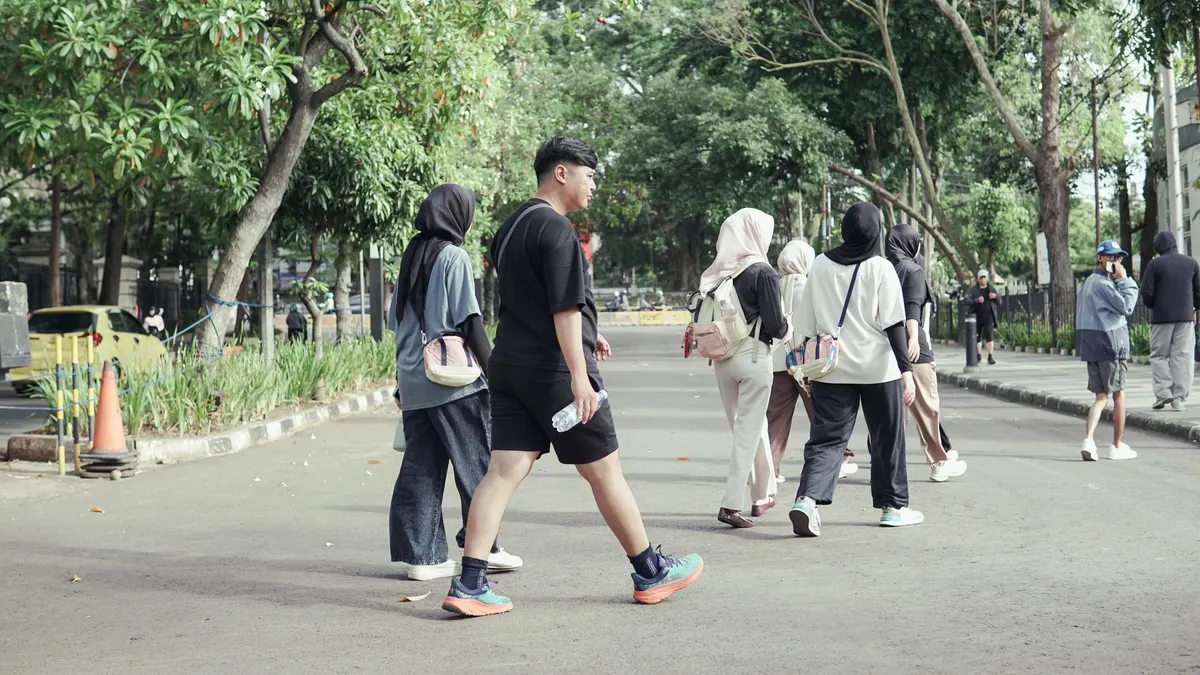
There is a particular kind of friendship loss that nobody warns you about. Nothing goes wrong. You do not argue. You still like each other, genuinely, and you would both say so out loud. But the youngest child starts school and the two of you are no longer standing in the same playground at 8:40 every weekday. Or the nursery years end. Or one of you moves two suburbs over. Or the job that put you in the same building changes, and now you are both at home.
Six months later you realise you have not seen them since October.
This is the most common way adult friendships end, and it is worth naming precisely, because the usual explanations are wrong. You did not drift because you stopped caring. You drifted because the thing that was doing the work was never the affection. It was the timetable.
Almost every adult friendship is parasitic on a structure
Think about where your current close friends came from. School. University. A workplace. A team. An NCT group or a baby class. A church. A neighbourhood you used to live in.
Almost none of them came from two people deciding, out of nowhere, to become friends and then arranging it repeatedly. They came from being in the same place at the same time, over and over, without either person having to organise it.
Ray Oldenburg gave a name to some of those places in 1989 — third places, the informal hangouts that are neither home nor work, where you turn up without a plan and find people. Robert Putnam spent Bowling Alone in 2000 documenting how the American versions of those places, and the clubs and leagues attached to them, had been thinning out for decades.
The thinning has continued and it is measurable. A 2025 study in Health & Place tracked twelve categories of third place across the United States — coffee shops, libraries, museums, recreation centres, restaurants and others — and found closures across every single category between 2019 and 2021. Losses concentrated in census tracts with higher social vulnerability, and in rural areas. Researchers at the University of Colorado Boulder, summarising that work, made the point that matters most: the disappearance of senior centres and churches is better understood as a cause of loneliness than as a symptom of it.
Something similar has happened to work. A study published in Science this month estimates that the rise of remote work explains roughly a third of the increase in isolation and mental distress between 2011–2019 and 2022–2024. Remote workers who live alone saw an increase in days spent alone about ten times that of workers who live with others. And face-to-face socialising in America was already falling before the pandemic, as reporting on the American Time Use Survey has laid out — it declined, then kept declining.
So when your friendship loses its structure, you are not being asked to try a bit harder in a world that is otherwise fine. You are being asked to build, by hand, scaffolding that used to be provided free. That is a real task. It has costs. It is reasonable to find it hard.
What happens to the friendship in the gap
The numbers on adult friendship are not subtle. The Survey Center on American Life found in 2021 that 12% of Americans report having no close friends, up from 3% in 1990. Among men, the share with at least six close friends fell from 55% in 1990 to 27%. Fifteen per cent of men report no close friends at all — a fivefold rise in three decades.
Parents are not insulated from this. Harvard’s Making Caring Common project found in 2021 that 36% of Americans reported serious loneliness, and that 51% of mothers with young children did. Half. The life stage that puts you in more rooms with more adults than almost any other is also one of the loneliest.
That is the paradox at the centre of this. The nursery pickup gives you contact without intimacy — twenty people you know by their child’s name. Then it ends, and you discover that contact was doing more emotional work than you had credited, and that you have no mechanism for keeping the two or three of those people you actually wanted.
The finding that should change what you do
Here is the useful part, and it points in a direction most people do not expect.
The most rigorous evidence we have on loneliness interventions suggests that structured, purposeful activity outperforms unstructured contact. A qualitative meta-synthesis in BMC Health Services Research in 2022 looked at what people actually said they got out of social prescribing programmes, and found benefit extending past social contact into restored participation and purpose — with structured group activity doing better than contact alone.
The HEAL-HOA trial, published this month, sharpens this considerably. It randomised 1,151 older adults — people living in poverty, living alone, digitally excluded — and compared telephone-delivered behavioural activation and mindfulness against a befriending control. Eight thirty-minute phone calls over a month, delivered by trained laypeople who were themselves older adults experiencing loneliness. At twelve months, the structured approaches had significantly reduced loneliness compared with befriending.
Note carefully what lost. Befriending — someone kind ringing you up for a chat, the intervention most services actually deliver — was the comparison that came second. Not because friendly contact is worthless. Because when contact has no shape, it is doing less than we assume.
Translate that to your Tuesday. The instinct when a friendship loses its structure is to reach for unstructured contact: we should catch up properly soon, let’s get a drink at some point, I’ll message you. That is befriending. It is the version that loses.
The version that wins has a shape. A fixed thing, at a fixed time, that you both do.
Repetition beats intensity, and it is not close
Research on college students coming out of the pandemic, published in Frontiers in Psychology in 2025, landed on the same place a lot of this literature does: the regularity and quality of contact matters more than the volume of it. AARP’s 2018 survey of adults 45 and over found that among people who had spoken to their neighbours, 33% were lonely — against 61% of those who never had.
One three-hour dinner every eight months, with all the planning it requires, does less for a friendship than forty minutes every fortnight that neither of you has to think about.
This is counterintuitive because the long dinner feels like more. You cover more ground. You leave with the sense of having done the friendship properly. But the friendship is not a body of information to be transmitted. It is a habit, and habits are maintained by frequency.
So what do you actually do
Pick one person. Not the group chat of nine. One.
Propose something with a time and a repeat in it, and be specific enough that saying yes requires no thought. “Second Tuesday of the month, 8pm, that pub on the corner, standing arrangement” is a very different ask from “we should catch up”. The first one is a decision made once. The second is a decision you both have to make again every time you are tired, and you will lose that decision most weeks.
Make the bar lower than feels adequate. A walk at 7am with coffee. A twenty-minute phone call on the same evening every week, while one of you does the washing up. Sitting in the same café on Saturday mornings and both reading. The structures that used to hold your friendships up were not high-quality experiences — they were the school gate — and they worked because they recurred.
Attach it to something that already exists in your week. This is the single highest-yield move available, because it removes the arranging, and the arranging is the real obstacle. Both take a child to swimming on Saturday? That is your standing appointment; you sit together for those forty minutes. Both walk a dog? Same park, same time. You are not adding an event to your life. You are stapling a friendship onto an event that was happening anyway.
Say the reason out loud. Something like: the playground thing is finishing and I don’t want to lose touch, can we make it a monthly thing. People are wary of imposing, so they imply instead of ask, and the implication gets missed. Harvard’s researchers found that about half of lonely young adults said nobody had taken more than a few minutes in recent weeks to ask how they were in a way that felt genuine. Directness is rarer than it should be, and it lands better than people fear.
And if the person you want to keep has already faded past the point where a standing arrangement feels natural, you can start from scratch on the structure side rather than the relationship side. Meetup, running since 2002 and reporting roughly 60 million members, is built entirely around recurring in-person groups — which is the property you want. Timeleft seats small groups of strangers at weekly dinners, matched by personality. Buffet posts curated experiences each week that you claim a seat at; a table confirms once three people have joined, groups cap at six, and there is a one-to-one mode as well. A library programme or a run club does the same job with no app at all.
None of those is a friendship. They are timetables. Which, it turns out, is the part that went missing.
Where this comes from
- Loneliness in America: How the Pandemic Has Deepened an Epidemic of Loneliness
- The State of American Friendship: Change, Challenges, and Loss
- Uneven Access to Essential Services and Amenities: Geographic Disparities in Third Place Availability Across the United States, 2010 to 2021
- As Community Spaces Disappear, New Research Warns of Health and Equity Risks
- The Great Good Place: Cafes, Coffee Shops, Bookstores, Bars, Hair Salons and Other Hangouts at the Heart of a Community
- Bowling Alone: The Collapse and Revival of American Community
- Home Alone: Remote Work, Isolation, and Mental Health
- Do People Perceive Benefits in the Use of Social Prescribing to Address Loneliness and/or Social Isolation? A Qualitative Meta-Synthesis
- Behavioral Activation and Mindfulness Interventions in Reducing Loneliness and Improving Well-Being in Older Adults: The HEAL-HOA Randomized Clinical Trial
- Americans Don't Socialize Face-to-Face as Much as They Used To
- Loneliness and Social Connections: A National Survey of Adults 45 and Older
- Social Connections Combat Loneliness and Promote Wellbeing Among College Students Coming Out of the COVID-19 Pandemic
- Timeleft: Weekly Dinners Matching Strangers by Personality
- Meetup: Interest-Based In-Person Group Events
- Buffet's New App Tackles the Loneliness Epidemic by Connecting People in the Real World