The Science
Why Asking Someone to Hang Out Feels Like an Imposition
The feeling that reaching out will burden someone else is one of the biggest blocks to making plans. Here's why it's usually wrong, and what to do instead of waiting for it to pass.
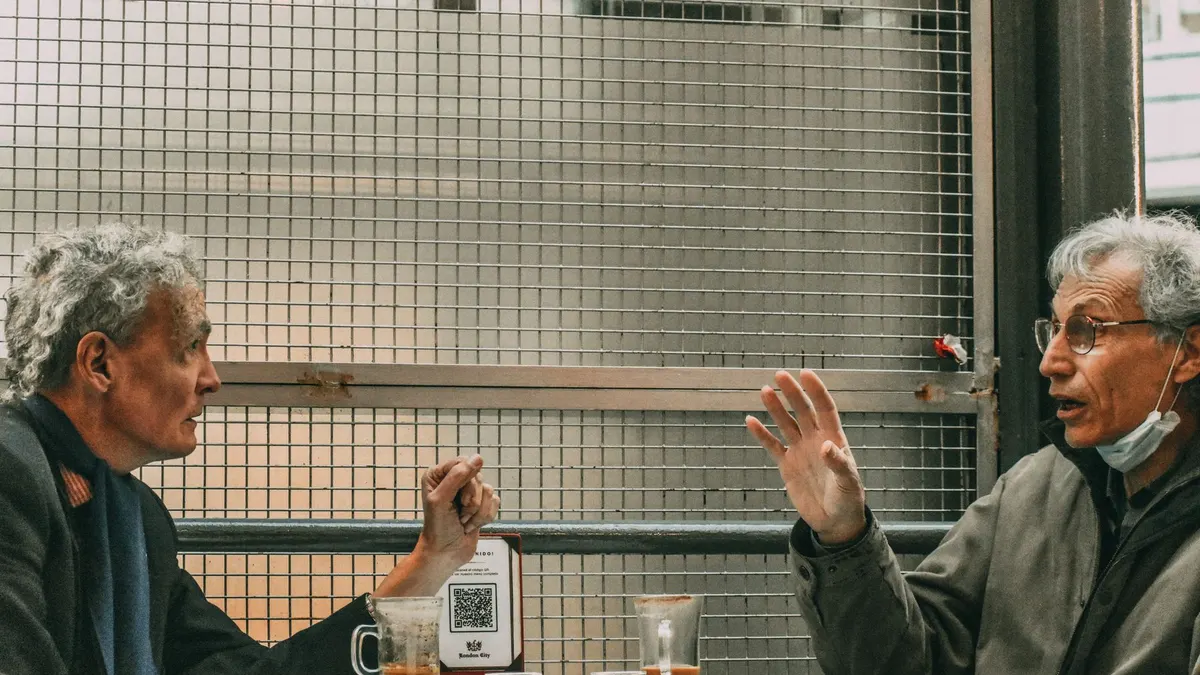
You have someone’s number. You’ve been thinking about texting them for two weeks. You haven’t, because some part of you is convinced that a message asking them to get a drink will land in their day like an unwanted chore.
This is not shyness, exactly. It’s a specific belief: that your company is a cost to the other person, and initiating contact means asking them to pay it. It’s worth naming precisely, because it doesn’t respond to the advice usually given for loneliness. “Put yourself out there” assumes the problem is opportunity. This problem is closer to a miscalculation you’re making about what your invitation actually costs someone else.
The math you’re doing wrong
Cacioppo’s work on loneliness treats it as a biological alarm, not unlike hunger — a signal built to push you toward reconnection. But an alarm that’s been going off for a while starts to distort judgement. Chronic loneliness has been linked to heightened social threat perception: you start reading neutral signals as rejection before they’ve even happened. So the person who hasn’t texted anyone in a while isn’t just out of practice. They’re often running a threat-detection system tuned to expect “no,” which makes the invitation feel riskier than it is.
Here’s the part that doesn’t get said enough: the other person is very likely doing the same math, about you. The 2021 Making Caring Common survey found that among lonely young adults, roughly half said no one had taken more than a few minutes recently to ask how they were doing in a way that felt genuine. That’s not a shortage of people who’d welcome contact. It’s a shortage of people willing to go first.
You are almost certainly overestimating the imposition and underestimating the relief.
The friendship recession is not about effort
Robert Putnam documented, decades before smartphones, a long decline in the kind of informal, unscheduled socializing that used to just happen — the drop-in visit, the standing card game, the neighbour on the porch. The infrastructure for casual contact eroded, and what’s left mostly has to be deliberately arranged. That means someone has to be the one who arranges it. There’s no version of adult social life left where invitations aren’t required.
The American Enterprise Institute’s 2021 survey on friendship found that 12% of Americans report having no close friends at all, up from just 3% in 1990 — and for men specifically, the share with no close friends rose fivefold over the same period, to 15%. That’s not a story about millions of individuals independently losing the knack for connection. It’s a structural shift, and it means a lot of people on the other end of your hesitant text are in the same position you are: waiting, assuming reaching out would be unwelcome, wrong about that.
What actually reduces the imposition feeling
Waiting for the feeling to go away doesn’t work, because the feeling is a symptom of isolation, not a rational read of the situation. It fades after contact, not before it. So the useful move is smaller and more specific than “reach out more.”
Make the ask small enough that refusal costs nothing. Not “let’s catch up soon” — that requires the other person to do scheduling work, which raises the stakes. Try: “Coffee Thursday at 10, the place on 5th?” A specific time and place is easier to say yes to and easier to say no to. Nobody has to negotiate.
Attach the invitation to something that already exists. “I’m going to the Thursday farmers market, want to come” is lower-stakes than “let’s hang out,” because it doesn’t put the whole burden of the plan on your company. You’re offering to share something you were doing anyway, not asking them to build an evening around you.
Say the actual reason, briefly. “Been meaning to catch up” is enough. You don’t need to justify the invitation with an occasion. People rarely resent being remembered; they’re more often surprised by it, in a good way.
Expect a “no” occasionally and don’t read it as data about your worth. People are busy, tired, overcommitted. A no this week is not a verdict on whether you should have asked. It’s just a no this week.
Go first with someone you’ve already seen recently, not someone from years ago. Reconnecting cold with an old friend carries more of the imposition feeling because more time has passed for the story “they probably don’t think about me” to calcify. Someone you saw at a work event last month, or ran into at the gym twice, is a lower-friction first move — the relationship is warm enough that an invitation reads as continuation, not intrusion.
None of this makes the first text painless. It just makes it smaller. The evidence suggests the actual risk you’re avoiding — bothering someone, being a burden — is much lower than it feels, and the actual cost of not sending it is the thing more likely to compound.
Where this comes from
- Loneliness in America: How the Pandemic Has Deepened an Epidemic of Loneliness
- The State of American Friendship: Change, Challenges, and Loss
- Bowling Alone: The Collapse and Revival of American Community
- Loneliness: Human Nature and the Need for Social Connection