Places to Go
Why Being Social Costs More Than It Used To
The free places where people used to see each other without paying for the privilege are disappearing fastest in the places that need them most. What's left mostly has a price on it.
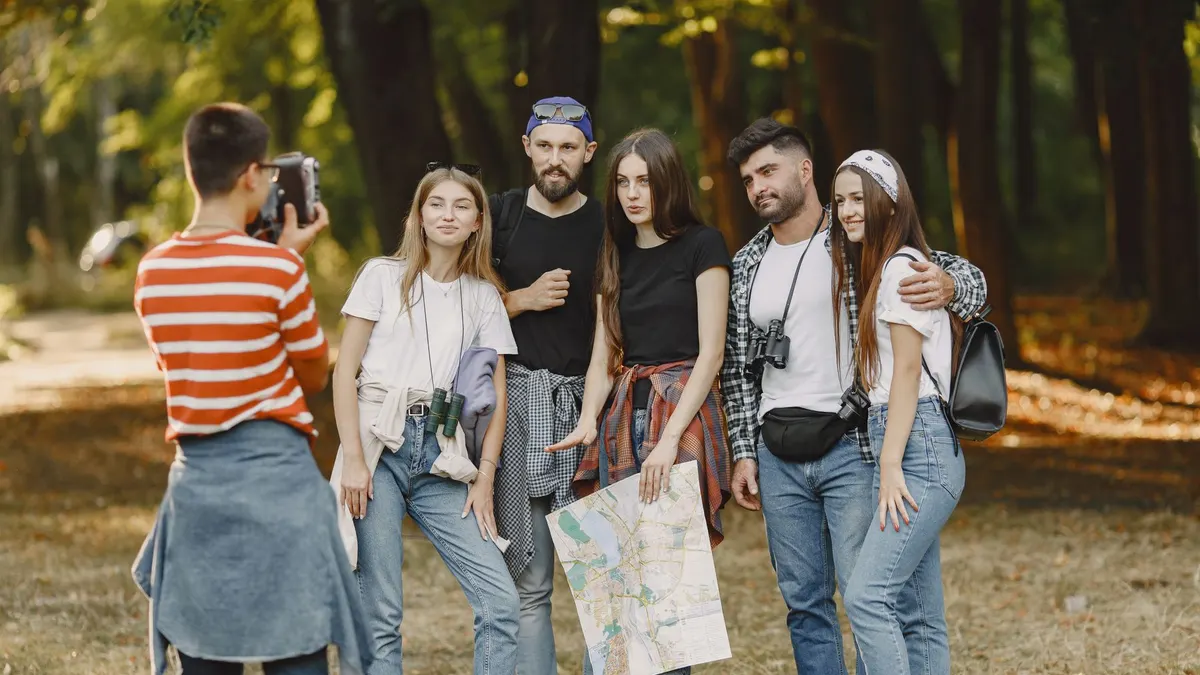
A coffee is $6 now in a lot of cities. A pint is $9. An hour at a climbing gym runs $25 once you factor in the shoe rental. None of that is scandalous on its own. But add it up over a month of trying to see people regularly, and it becomes a real reason some people stop trying.
This is not usually how loneliness gets talked about. The conversation tends to run on psychology: shyness, burnout, being out of practice. Rarely does it run on arithmetic. But for a lot of people the honest obstacle is that socialising now happens mostly in places that charge admission, and admission adds up.
The free places went first
Sociologist Ray Oldenburg gave a name to the places this used to happen in decades ago: third places. Not home, not work, but the café, the barbershop, the pub, the park bench where you saw the same people without an agenda and without much money changing hands. Robert Putnam’s Bowling Alone traced the decline of that whole layer of American life — bowling leagues, civic clubs, the informal churn of people running into each other. Eric Klinenberg, writing later, made the case that this stuff is not incidental. He calls it social infrastructure, and argues it works the way a bridge or a water main works: invisible until it fails, and then everyone notices.
It has been failing for a while, and unevenly. A 2025 study in Health & Place tracked twelve kinds of third place — coffee shops, libraries, museums, rec centres, restaurants — across the US between 2019 and 2021 and found closures in every category. The losses were not spread evenly. They were concentrated in places that were already more socially vulnerable, and in rural areas. Research from the University of Colorado Boulder summarising this work points to something specific: senior centres and churches disappearing, and that loss functioning as a driver of loneliness rather than a side effect of it. Axios reported in July 2026 on the same pattern, linking uneven third-place access directly to loneliness data.
What replaces a library reading room or a union hall, in a lot of towns, is a business. A coffee shop with laptops and a two-item minimum. A gym with a membership fee. A bar. These aren’t bad places. But they were never designed to be somewhere you sit for free for two hours, and increasingly they are actively designed not to be.
The subscription version of a social life
Even the fixes people reach for cost money. Meetup, one of the longest-running platforms for recurring interest groups, has a free tier, but plenty of its most active groups charge for events or ask for a venue minimum. Timeleft, which organises weekly dinners matching strangers by personality, has seated more than three million guests since 2020 — but it is, by design, a dinner. You are paying for a restaurant meal as the price of the introduction. That is a reasonable trade for someone with disposable income and not much time. It is a wall for someone without either.
None of this makes these tools bad. It means the honest description of “just go meet people” now usually includes a dollar figure nobody states out loud.
Why this hits certain groups harder
AARP’s 2018 survey of adults 45 and older found something worth sitting with: 33% of people who’d spoken to their neighbours recently were lonely, against 61% of those who never had. Neighbours are free. A conversation on a stoop or in a hallway costs nothing and takes no reservation. That gap — 33% versus 61% — is one of the cleanest pieces of evidence that the cheapest form of contact is often protective, and that losing easy access to it is not a small thing.
The people most exposed to the disappearance of free third places are also, disproportionately, the people with the least spare income to buy their way back into a social life: retirees on fixed incomes, people in rural areas where the nearest paid alternative is a 40-minute drive, single parents for whom $40 for a class is $40 not spent on something else. The loneliness numbers and the poverty numbers are not separate problems being solved by separate policies. They are the same problem showing up twice.
What’s actually still free, and what to do with it
This is where it’s easy to slide into a cheerful list of “free things to do,” which is not the point. The point is that free contact points still exist, they are just fewer and more scattered than they used to be, and they reward repetition more than discovery.
The library is the strongest one left. It is one of the only remaining third places that is unambiguously free, indoors, open long hours, and welcomes you to just sit. Many run recurring programmes — book groups, craft sessions, talks — that cost nothing and happen on a fixed schedule, which matters more than the content. A weekly library book group beats a one-off paid event for the same reason repetition always beats intensity: you see the same faces enough times for a nod to become a conversation.
Parks and rec centres, where they still exist, work the same way. A regular pickup game, a free yoga class on a lawn, a dog park at the same hour each day. The dog park in particular is underrated: it is one of the last places adults reliably talk to strangers without an app mediating it, and the ticket price is a dog you already own.
Running clubs and walking groups are usually free or near enough — a $5 annual membership, if that — and meet at the same time and place every week. That fixed-time, fixed-place structure removes the decision-making that costs willpower on a tired evening, which is a bigger deal than it sounds.
Volunteering deserves a mention here that goes beyond “it’s nice.” A 2024 randomised controlled trial published in The Lancet Healthy Longevity tested volunteering against a control group among lonely older adults and found it reduced loneliness — one of the few controlled trials in a field mostly made up of small, uncontrolled programme evaluations. Volunteering is also, notably, one of the few social activities that costs nothing and sometimes pays a stipend.
What to ask before you spend anything
If money is the actual constraint, the useful question before joining a paid thing isn’t “can I afford this once.” It’s “can I afford this weekly, for three months, without resenting it.” A one-off paid event that never repeats gives you an evening. A free, recurring, unglamorous thing — same library group, same walking loop, same park bench at the same hour — gives you a social life, because it is built on the thing that actually works: seeing the same people again and again until they are not strangers anymore.
That doesn’t fix the structural problem. The third places are still closing, and that is a policy failure, not a personal one to solve through better budgeting. But it does mean the honest advice isn’t “spend more” or “try harder.” It’s: find the free thing that repeats, and show up to it even when it’s easier not to.
Where this comes from
- The Great Good Place: Cafes, Coffee Shops, Bookstores, Bars, Hair Salons and Other Hangouts at the Heart of a Community
- Bowling Alone: The Collapse and Revival of American Community
- Palaces for the People: How Social Infrastructure Can Help Fight Inequality, Polarization, and the Decline of Civic Life
- Uneven Access to Essential Services and Amenities: Geographic Disparities in Third Place Availability Across the United States, 2010 to 2021
- As Community Spaces Disappear, New Research Warns of Health and Equity Risks
- A Loneliness Epidemic Meets Uneven Social Infrastructure
- Loneliness and Social Connections: A National Survey of Adults 45 and Older
- Timeleft: Weekly Dinners Matching Strangers by Personality
- Meetup: Interest-Based In-Person Group Events