The Science
Why Tuesday Night Is the Hardest Night to Fix
Weekday evenings are where American social life actually collapsed. Here's what the time-use data shows, and why a recurring Tuesday plan beats another open invitation.
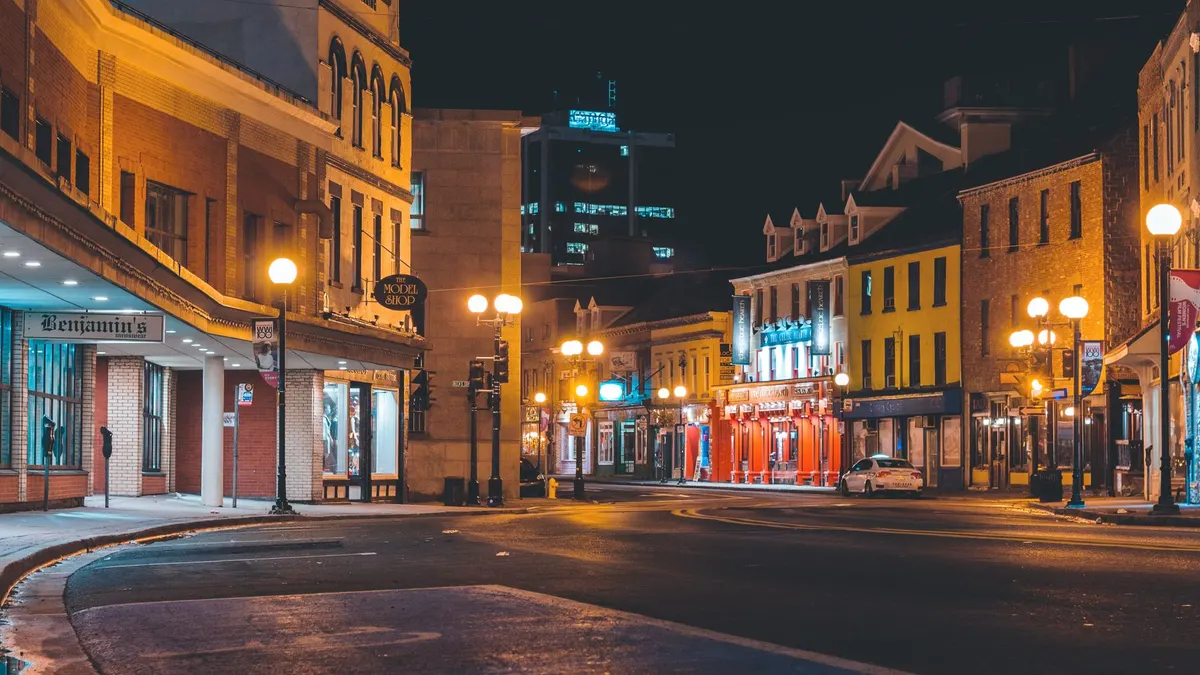
Weekends get the credit. Weekday evenings do the damage.
American Time Use Survey data reported by WBUR shows that face-to-face socializing has been declining for years, and the drop started well before the pandemic. That decline is not evenly spread across the week. It concentrates in the hours between finishing work and going to bed on Monday through Thursday — the block of time most people actually have the most of, and use the least.
This is worth separating out from the general loneliness conversation, because the weekday evening has a specific set of problems that Saturday does not. Understanding them changes what you should actually try to do about it.
The three things working against a Tuesday night
First, there is decision fatigue. By 6pm on a weekday, most people have spent the day making choices — what to prioritize, what to answer, what to let slide. Deciding to also go somewhere, see someone, and be sociable is one more decision, made at the exact moment the brain has the least capacity left for it. This is not laziness. It is the same reason the couch wins even when a person genuinely wanted to go out that morning.
Second, there is the arranging problem. Weekend plans get made days in advance, with slack built in. Weekday plans have to be made against a commute, dinner, and whatever the next morning requires. Robert Putnam’s account of the decline in American civic participation in Bowling Alone describes a broader retreat from the regular, informal associations — bowling leagues, card clubs, civic groups — that used to fill exactly this kind of slot without anyone having to organize it fresh each week. Those structures did the arranging in advance, on a standing schedule. Most people no longer have an equivalent.
Third, there is the venue problem. Ray Oldenburg’s concept of the third place — a spot that is neither home nor work, where you can turn up without a specific plan and expect to see someone you know — depended on there being somewhere open, unstructured, and nearby at 7pm on a Wednesday. Eric Klinenberg’s research on social infrastructure makes a related point: libraries, parks, and other shared physical spaces measurably shape how often people actually run into each other. When those spaces shrink or shift their hours to fit an office schedule that assumes evenings are for going home, the weekday evening loses its default setting. The bar closes early. The library isn’t open. The rec league finished in May.
The people most exposed to this particular gap
Cigna’s 2020 loneliness report found that lonely workers miss work roughly twice as often due to illness and five times as often due to stress — a sign that the weekday isolation problem and the workday itself are tangled together, not separate.
Gallup’s 2024 workplace data adds a detail that matters here: fully remote employees report loneliness at 25%, against 21% for hybrid workers and 16% for people fully on-site. The people with the least built-in reason to leave the house on a Tuesday are also the ones most likely to feel isolated by Tuesday night. Remote work removed the commute, the office kitchen conversation, the after-work drink that happens because everyone is already in the same building. It did not replace any of that. It just left a gap where those small, unplanned contacts used to sit.
The American Enterprise Institute’s 2021 survey on American friendship found that 12% of Americans report having no close friends at all, up from 3% in 1990, and that the share of men with six or more close friends fell from 55% to 27% over the same period. Those friendships did not vanish because people stopped liking each other. They eroded one skipped Tuesday at a time, because nobody replaced the standing structure — the bowling league, the church group, the after-work softball team — that used to make a weekday evening social by default rather than by effort.
There is also a quieter finding worth noting. AARP’s 2018 survey of adults 45 and older found that 33% of people who talk to their neighbours regularly report loneliness, against 61% of those who never do. Neighbours are, almost by definition, a weekday-evening relationship. You do not drive across town to see them. You run into them, or you don’t, based entirely on whether either of you is outside your door at the same time. That is the exact mechanism a lot of weekday social life used to run on, and it is the exact mechanism that disappears when the third place disappears.
What actually works against a Tuesday, specifically
The fix for a weekend social gap and the fix for a weekday social gap are not the same thing, and treating them as the same thing is why a lot of well-meaning advice fails on a Tuesday.
Weekend advice tends to be about finding new things to do. Weekday advice needs to be about removing the decision entirely, because the decision is the actual obstacle, not the lack of options.
That means the most useful thing a person can build for a Tuesday is not a plan. It is a standing appointment that doesn’t require a plan each week. A recurring thing — the same gym class, the same trivia night, the same walk with one other person — at the same time, on the same day, so that by the time 6pm decision fatigue sets in, there is nothing left to decide. You already said yes, months ago, to Tuesday.
This is also why a single group text asking “anyone free tonight?” almost never works on a weeknight. It requires three or four tired people to independently make a fresh decision at the worst possible hour to make one. A standing 6:30 dinner with the same two people on the same day every other week bypasses that entirely, because nobody has to decide anything except whether to cancel — and cancelling a standing plan carries a small social cost that a floated one doesn’t, which is precisely why it survives tiredness better.
The low-effort version of this is smaller than it sounds. It does not need to be a club or a class with a fee attached. It can be a fifteen-minute phone call with one person, at the same time every Wednesday, that both people treat as fixed rather than optional. The content matters far less than the fact that it recurs and that neither person has to arrange it fresh.
The third-place version — a bar, a café, a library programme, a run club — works best when it has a fixed weekly slot rather than an open-ended invitation to “stop by sometime.” Open-ended is exactly the kind of decision a tired weekday brain will defer indefinitely. A specific Tuesday at 7pm, repeated, is not.
None of this solves the structural version of the problem — that fewer third places exist, that more people work remotely with no equivalent replacing the office, that neighbourhoods are less likely to know each other than they were in 1990. But on the scale of one actual Tuesday, the fix is not more motivation. It’s one standing appointment that doesn’t ask you to decide anything at 6pm, because by then, you won’t have much left to decide with.
Where this comes from
- Americans Don't Socialize Face-to-Face as Much as They Used To
- Bowling Alone: The Collapse and Revival of American Community
- The Great Good Place: Cafes, Coffee Shops, Bookstores, Bars, Hair Salons and Other Hangouts at the Heart of a Community
- The State of American Friendship: Change, Challenges, and Loss
- Loneliness and Social Connections: A National Survey of Adults 45 and Older
- Loneliness and the Workplace: 2020 U.S. Report
- Palaces for the People: How Social Infrastructure Can Help Fight Inequality, Polarization, and the Decline of Civic Life
- 1 in 5 Employees Worldwide Feel Lonely