Places to Go
Why Wanting Company Doesn't Get You Out the Door
Most people who feel lonely already want to see other people. The research suggests the blockage isn't desire — it's that the places which used to hold contact without an invitation have thinned out, and arranging things yourself is the exact part anxiety attacks.
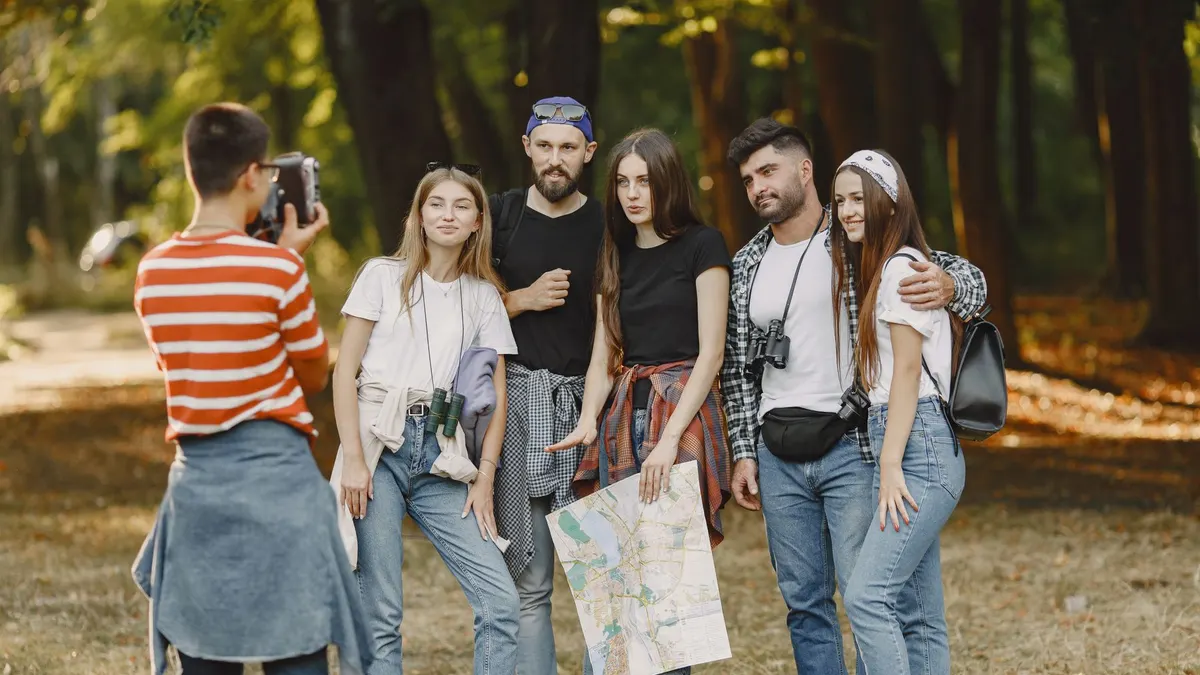
There is a specific kind of evening that most surveys never capture. You are at home. You would like to be around people. There is a thing on — a class, a quiz, a friend’s drinks — and you have already decided, somewhere below the level of a decision, that you are not going.
That gap between wanting and doing is the most common experience in loneliness, and it is the one that gets explained worst. The usual explanation is that you are avoidant, or bad at socialising, or need to work on yourself. The research points somewhere less flattering to that story and more useful to you.
Wanting has not fallen. Doing has.
The Cigna Group’s Loneliness in America 2025 report put loneliness at 57% of American adults, and 52% of workers. Those numbers describe people who want more connection than they have. Wanting is not in short supply.
Meanwhile the amount of time Americans spend socialising face to face has been falling. WBUR’s reporting on the American Time Use Survey data makes the point that matters: the decline started well before the pandemic and continued after it. Robert Putnam documented the earlier stretch of the same curve in 2000 — club membership, informal socialising, having people round.
So the desire is high and the behaviour is low. If loneliness were simply a lack of motivation, that combination would not exist.
John Cacioppo’s framing helps here. In his 2008 book he described loneliness as an aversive biological signal, like hunger or thirst — unpleasant on purpose, evolved to push you back toward other people. It works. It makes you want company. What it does not do is tell you where to go.
The part that got harder is the arranging
Ray Oldenburg’s 1989 book named the thing that used to fill that gap: the third place. Not home, not work. The café, the pub, the barbershop, the library. Oldenburg’s argument was that these places carry informal social life because you can go without a plan and without an invitation. Nobody has to ask you. Nobody has to be free. You turn up, and other people have turned up.
Eric Klinenberg’s 2018 work on social infrastructure made a stronger version of the claim: shared physical space measurably changes how much social contact people have, and in the 1995 Chicago heat wave, whether they survived.
Now the numbers. A study in Health & Place this month tracked twelve categories of third place across the United States — coffee shops, libraries, museums, recreation centres, restaurants and others — and found closures in every single category between 2019 and 2021. The losses were not spread evenly. They were concentrated in census tracts with higher social vulnerability, and in rural areas. If it feels like there is nowhere to go, that is not a mood. In a lot of places it is an inventory.
Here is why this bears on social anxiety specifically. When there is no default place, every instance of seeing people has to be arranged. Somebody has to choose a venue, pick a date, message a group, absorb the silence when two people don’t reply, and carry the low hum of having imposed. That work is not distributed evenly either. It falls on whoever is willing to do it.
And it is precisely the part that anxiety attacks. Not the being-there. The asking.
Notice that the thing you dread is usually not the conversation. It’s the sentence you have to send first.
The other side of the gap
The Harvard Making Caring Common survey in 2021 found 36% of Americans reporting serious loneliness — including 61% of young adults aged 18 to 25 and 51% of mothers with young children. The finding from that report which changes behaviour, though, is a different one. About half of the lonely young adults said that in recent weeks, nobody had taken more than a few minutes to ask how they were doing in a way that felt genuine.
Read that against your own hesitation. You are not deciding whether to burden a person who is full up. You are, statistically, quite likely to be messaging someone who has had no one ask after them properly in weeks.
The AARP Foundation’s 2018 survey of adults 45 and older, which used the full 20-item UCLA Loneliness Scale, has a similarly blunt comparison. Among people who had spoken to their neighbours, 33% were lonely. Among people who never had, 61% were. That is a correlation, not proof that hellos cure anything. But it tells you what kind of contact these numbers are made of. It is not deep disclosure. It is speaking to someone at all.
What seems to close the gap
The most reliable finding across this literature is unglamorous: the same people, repeatedly, beats new people, once. A 2025 study of college students coming out of the pandemic found that the regularity and quality of contact predicted wellbeing better than the sheer number of connections.
Second: give the evening a task. A 2022 meta-synthesis in BMC Health Services Research, looking at how people actually experienced social prescribing, found that participants described the benefit as restored purpose and meaningful participation — not just contact — and that structured, purposeful group activity appeared to do more than contact alone. For anyone anxious, this is doubly true for a practical reason. An activity with a task has a script. Open-ended mingling does not, which is why drinks with strangers is harder than a choir, a workshop, a bike repair session, or a shift on a food bank line.
Third: structure you did not have to build. A thing that happens at the same time, in the same room, whether or not you organised it. That removes the decision you would otherwise be making at nine in the evening while tired, which is the moment you reliably decide no.
Where the evidence is genuinely thin
It would be dishonest to hand you this as settled science. The American Heart Association’s 2022 scientific statement, which put the increased risk of heart attack, stroke or death from either at roughly 30%, explicitly identified the absence of intervention evidence as the central research gap. We know disconnection is harmful. We know much less about what fixes it.
Social prescribing is the clearest example. A 2025 systematic review protocol noted that despite widespread adoption, its effectiveness for older adults remains unclear, with only one peer-reviewed randomised controlled trial in the area. The HEAL-HOA trial in Hong Kong, published in The Lancet Healthy Longevity in late 2024, is notable mostly because it is a real randomised trial of volunteering and prosocial engagement among lonely older adults, in a field otherwise full of small uncontrolled studies.
So: treat the guidance above as scaffolding with decent support, not as a protocol. The direction is well evidenced. The dose is not.
The one decision worth making tonight
Find something that repeats. Weekly, or fortnightly. Same place, same time, not organised by you.
A library programme with a standing slot. A run club. A pub quiz. A six-week class where the same eleven people show up. Meetup, which reports around 60 million members, is still the widest listing for recurring interest groups, and the recurring part is the point — a group that meets monthly is worth more to you than three one-off events.
If a meal is easier than a group, that category exists too. Timeleft seats small groups of strangers at weekly dinners matched by personality, with no messaging before you arrive, which removes the part most people dread. Buffet, which launched in Los Angeles and was covered by TechCrunch in April 2024, matches you with one other person and a place to meet based on interests and a short personality questionnaire.
Then the actual instruction: go four times before you judge it. The first visit is admin. The second is recognition. Somewhere around the third or fourth, someone says your name when you walk in, and that is the whole mechanism.
Four visits is a low bar. It is much lower than making a friend, and it is the only part you control.
Where this comes from
- Uneven Access to Essential Services and Amenities: Geographic Disparities in Third Place Availability Across the United States, 2010 to 2021
- The Great Good Place: Cafes, Coffee Shops, Bookstores, Bars, Hair Salons and Other Hangouts at the Heart of a Community
- Palaces for the People: How Social Infrastructure Can Help Fight Inequality, Polarization, and the Decline of Civic Life
- Loneliness: Human Nature and the Need for Social Connection
- Loneliness in America: How the Pandemic Has Deepened an Epidemic of Loneliness
- Loneliness in America 2025
- Americans Don't Socialize Face-to-Face as Much as They Used To
- Bowling Alone: The Collapse and Revival of American Community
- Loneliness and Social Connections: A National Survey of Adults 45 and Older
- Do People Perceive Benefits in the Use of Social Prescribing to Address Loneliness and/or Social Isolation? A Qualitative Meta-Synthesis
- The Role of Social Prescribing in Alleviating Social Isolation and Loneliness in Older Adults: A Systematic Review Protocol
- The Effects of Volunteering on Loneliness Among Lonely Older Adults: The HEAL-HOA Dual Randomised Controlled Trial
- Social Connections Combat Loneliness and Promote Wellbeing Among College Students Coming Out of the COVID-19 Pandemic
- Effects of Objective and Perceived Social Isolation on Cardiovascular and Brain Health: A Scientific Statement From the American Heart Association
- Timeleft: Weekly Dinners Matching Strangers by Personality
- Meetup: Interest-Based In-Person Group Events
- Buffet's New App Tackles the Loneliness Epidemic by Connecting People in the Real World