Family & Parents
The Myth That Having a Baby Makes You Less Lonely
New parents are often told a baby will fill their social life. The evidence says the opposite happens to a lot of parents, and the reason is about the difference between contact and connection.
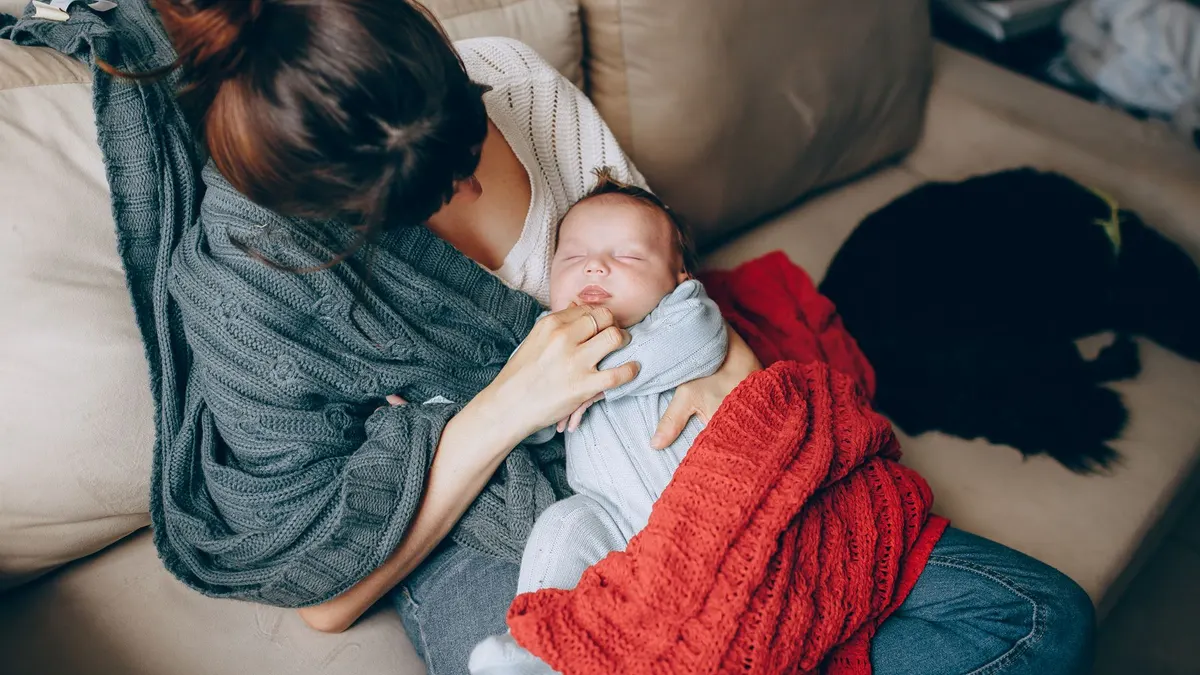
Fifty-one percent of American mothers with young children reported serious loneliness in a 2021 survey from Harvard’s Making Caring Common project. That is a higher rate than the general adult population, and it sits uneasily next to a belief a lot of people hold going into parenthood: that a baby will fill your social life, not empty it.
The logic behind that belief makes sense on paper. A baby brings visitors. It brings grandparents, in-laws, other parents at the playground, a WhatsApp group from antenatal class. Your house is suddenly full of people who want to see the baby. It looks like the opposite of isolation.
It often is not.
Contact is not the same thing as connection
The confusion is between being around people and being known by them. A grandparent cooing over a newborn for twenty minutes is contact. So is a stranger at the supermarket asking the baby’s age. Neither is the kind of relationship that protects against loneliness, which depends on being seen consistently, over time, by people who ask how you actually are and stick around for the answer.
The Harvard survey found something specific about this: about half of lonely young adults said no one had taken more than a few minutes in recent weeks to ask how they were doing in a way that felt genuine. New parents get asked about the baby constantly. They get asked about themselves far less. The volume of interaction goes up. The kind of interaction that actually reduces loneliness does not necessarily go up at all.
Robert Putnam’s distinction between bonding and bridging social capital is useful here, even though he was not writing about parenthood. Bonding capital is the tight, reciprocal kind — people who know you and would notice if you disappeared. Bridging capital is looser and wider — acquaintances, weak ties, people who nod at you. A new baby tends to generate a surge of bridging contact: more nods, more small talk, more people passing through the house. It does not automatically generate bonding contact. If anything, the people who had bonding relationships with you before the baby — old friends, colleagues, whoever you used to see regularly — are often exactly the people you now see less.
What actually gets lost
This is the part that gets skipped over. Having a baby does not just add people to your life. It subtracts a specific kind of infrastructure that used to produce friendship without you having to arrange it.
Ray Oldenburg’s idea of the third place — the café, the bar, the gym, the workplace kitchen, anywhere you show up regularly without an agenda — describes exactly the settings that new parenthood tends to remove. You are not popping into the office. You are not at the pub after work. You are not at the gym at the time you used to go. Eric Klinenberg’s argument about social infrastructure points the same direction: it is not really about wanting to socialise more or less. It is that the physical routines that used to put you next to the same people, week after week, have been replaced by routines that put you next to no one, or next to a rotating cast of strangers at a different park each time.
That is the actual mechanism behind the loneliness numbers. It is not that new parents have become less sociable people. It is that the third places got swapped for a first place — home — with almost nothing bridging the two.
Why the playgroup circuit doesn’t fix it
The standard advice is to join things: baby groups, parent-and-toddler sessions, a different class each morning of the week. Some of this helps. Most of it, done the way it’s usually done, recreates the exact problem it’s meant to solve.
Rotating through a different group every day means meeting a slightly different set of parents every time. That produces contact, not connection, for the same reason a different café every day would. The parents who end up genuinely less isolated tend to be the ones who picked one thing and kept going back to it — the same group, the same day, the same time, week after week, until the faces stop being strangers and start being people who notice if you’re not there.
This is the part worth taking seriously if you are choosing how to spend a limited amount of energy right now: fewer things, repeated, beats more things, tried once. A single weekly group you actually return to for two months will do more than five different sessions attended once each.
What a low bar actually looks like
The useful action here is smaller than “build a new social life.” It is: pick one recurring thing, ideally with a fixed time and a fixed place, so you’re not deciding whether to go each week while exhausted. That could be a library rhyme time, a parent walking group, or a Meetup-organised group for people with children of similar ages — Meetup remains a large, free platform built specifically around recurring rather than one-off events, which suits this better than an app designed for single meetups.
It also means being honest that the people who show up at your door to see the baby are not a substitute for the friend you haven’t texted back in three months. Both things can matter. They are not interchangeable, and treating the first as a replacement for the second is most of what makes new-parent loneliness catch people by surprise.
Where this comes from
- Loneliness in America: How the Pandemic Has Deepened an Epidemic of Loneliness
- Bowling Alone: The Collapse and Revival of American Community
- The Great Good Place: Cafes, Coffee Shops, Bookstores, Bars, Hair Salons and Other Hangouts at the Heart of a Community
- Palaces for the People: How Social Infrastructure Can Help Fight Inequality, Polarization, and the Decline of Civic Life
- Meetup: Interest-Based In-Person Group Events